
How to Spend a 60-Minute Sim Session to Get Better on the Course
Most people spend a sim hour hitting drivers. This 60-minute TrackMan plan turns bay time into a yardage chart, a better strike and lower scores.
The best way to spend a 60-minute simulator session is to split it into five blocks: a 10-minute wedge warm-up, a 15-minute wedge distance ladder, 15 minutes fixing one TrackMan number, 15 minutes playing real holes, and a 5-minute closest-to-the-pin game. Each block has one job, so the hour shows up on your scorecard.
Most golfers walk into a simulator bay, grab the driver and start swinging. Forty-five minutes later they've hit 80 balls and learned almost nothing they can take to the course. An hour in a TrackMan bay is plenty of time to get better if you use it on purpose. Here's the plan we'd hand any member.
Minutes 0 to 10: Warm up with a wedge, not the driver
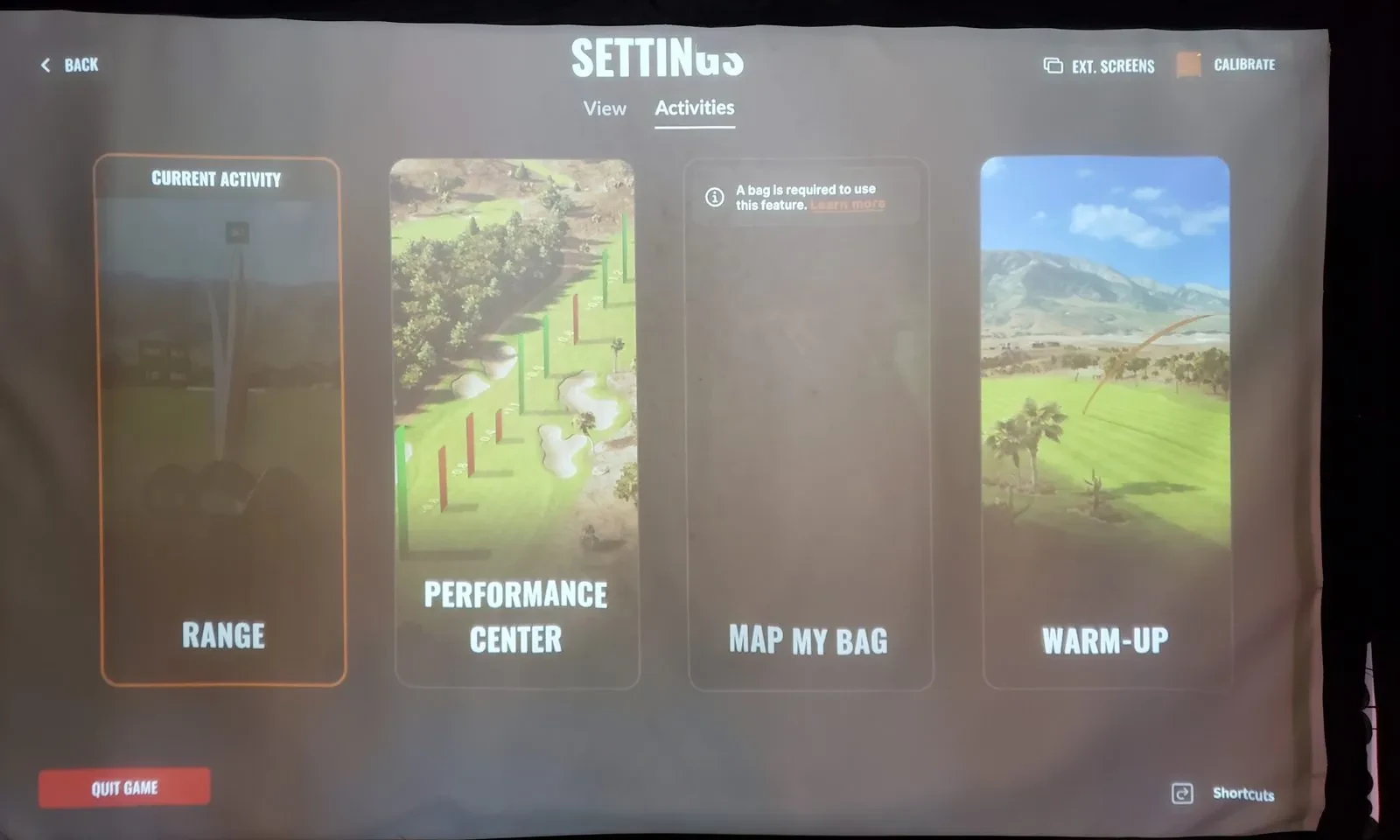
Start with half and three-quarter swings using a pitching wedge or sand wedge. Don't chase anything yet. Watch two numbers: carry distance and launch direction.
The goal is center contact and a repeatable start line before you add speed. If your first ten swings are all over the map, that tells you something too, and it's better to learn it here than on the first tee.
Minutes 10 to 25: Build your wedge distance ladder
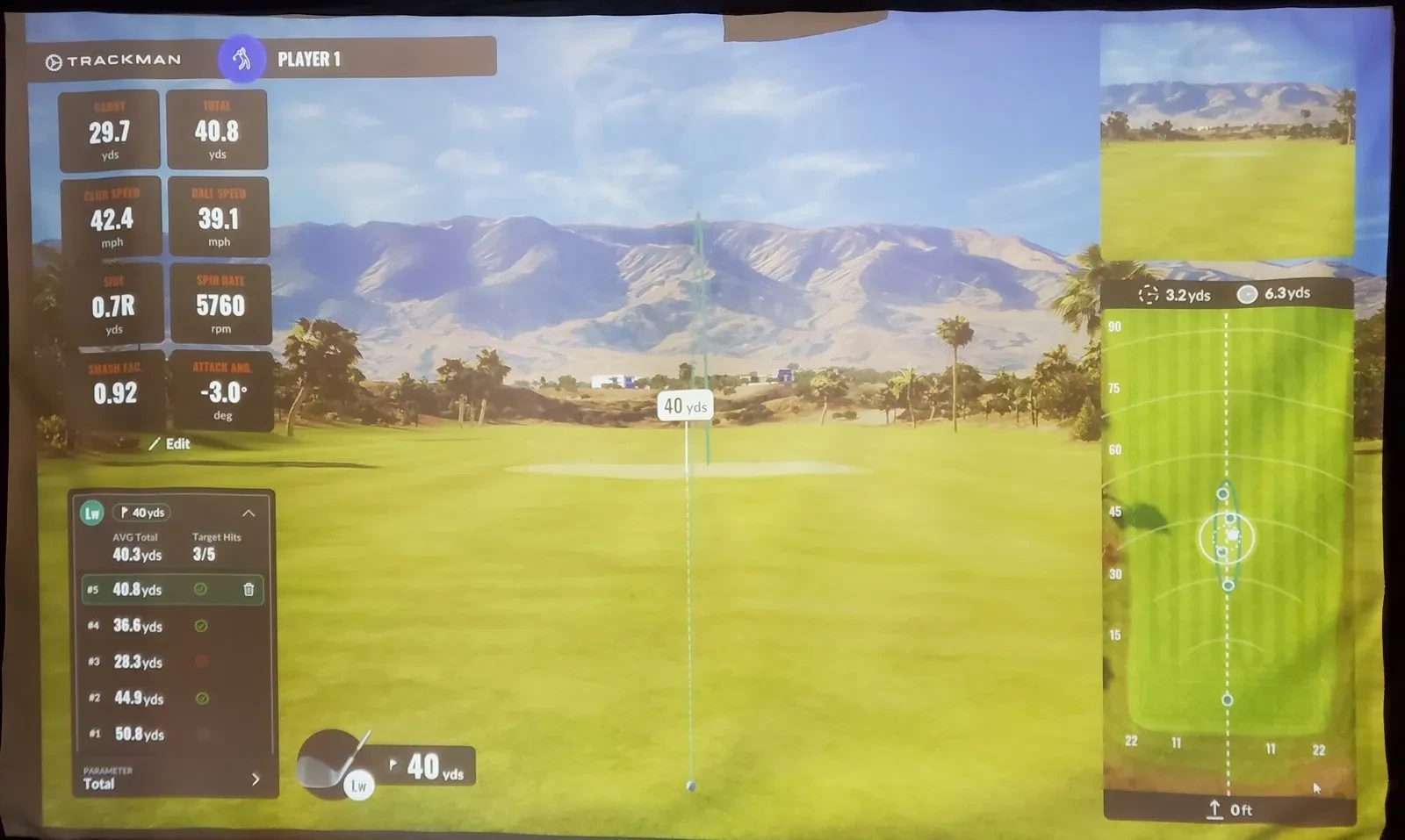
This is where a simulator beats the driving range, because it tells you exactly how far the ball carried. No guessing, no roll, no "I think that one went 100."
Pick three swing lengths with your favorite wedge (for example hip-high, chest-high and full) and hit five balls at each. Write down the average carry for each. If you have time, repeat with your next wedge.
You'll walk out with a personal yardage chart for every shot inside 120 yards. That's where most scoring happens, and most golfers have never measured it.
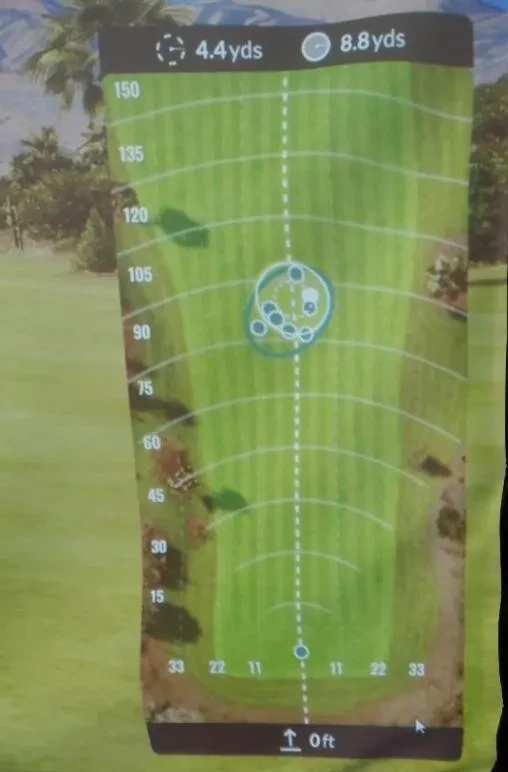
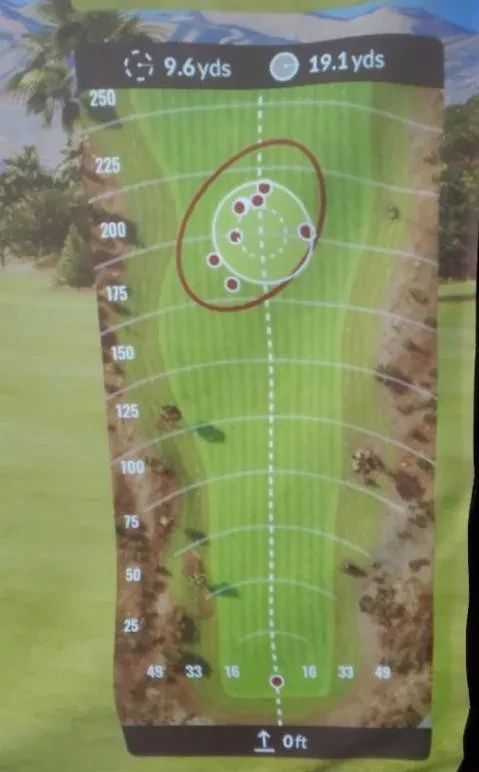
Before you move on, open the dispersion view. TrackMan circles where every shot landed, so you can see how tight your group really is, not just your average. Do the same with a long iron and you'll see why the middle of the green is the smart target from 200 yards.
Minutes 25 to 40: Pick one number and work on it
TrackMan gives you a lot of data. Don't try to fix all of it. Pick the one number that matches your miss and stay with it for 15 minutes:
- Slicing it? Watch face to path, and try to bring that number closer to zero.
- Hitting it fat or thin? Watch attack angle with your irons and aim for slightly downward contact.
- Coming up short? Watch smash factor. A better strike gets more ball speed from the same swing.
Use a mid-iron for this block. Make one small change, hit five balls, check the number, repeat. When something clicks, hit five more to make sure it wasn't luck.
Minutes 40 to 55: Play holes like they count
Switch from the practice range to a real course in TrackMan Virtual Golf and play three or four holes. These rules make it practice instead of a video game:
- One ball per shot. No mulligans.
- Full pre-shot routine on every swing. Pick a target, take your practice swing, commit.
- Use your new wedge numbers. With 85 yards in, pick the swing from your ladder and trust it.
This is the part that carries over. The range teaches your swing; playing holes teaches you to use it with a little pressure on.
Minutes 55 to 60: Finish with a closest-to-the-pin game
Hit five balls at one target, at a distance you'll actually face on the course. Track your average distance from the pin and write it down. Next session, try to beat it.
Ending on a game keeps the hour fun and gives you a benchmark to track. "I hit it better" becomes "I'm 3 feet closer than last month."
The 60-minute plan at a glance
| Time | What to do | What to watch |
|---|---|---|
| 0 to 10 min | Wedge warm-up | Carry, launch direction |
| 10 to 25 min | Wedge distance ladder | Average carry at 3 swing lengths |
| 25 to 40 min | One-fix block with a mid-iron | Face to path, attack angle or smash factor |
| 40 to 55 min | Play 3 or 4 holes, one ball | Routine, using your wedge numbers |
| 55 to 60 min | Closest-to-the-pin game | Average distance to pin |
Key takeaways
- Warm up with a wedge and watch carry and launch direction.
- Measure your wedge carries to build a yardage chart inside 120 yards.
- Work on one TrackMan number at a time.
- Play real holes with one ball and a full routine.
- End with a closest-to-the-pin score you can beat next time.
Make it a habit
One good hour won't change your handicap. One good hour every week will. Keep a note on your phone with your wedge ladder and closest-to-the-pin score, and update it every session.
Premium and Ultimate members at The Golfhouse in Ladson have 24/7 access to private TrackMan bays, so you can run this plan whenever it fits your week. Memberships are month-to-month. Book a tour to see the bays.